<!DOCTYPE html>
Smart Ways to Lower Your Kingman Electric Bills This Summer
Body font-family: Arial, Helvetica, sans-serif; line-height: 1.55; color: #222; margin: 0; background: #f7f7f9;
.box max-width: 980px; margin: 24px auto; background: #fff; border: 1px solid #e2e2e8; border-radius: 8px; box-shadow: 0 2px 8px rgba(0,0,0,0.05);
Header, section, footer padding: 22px 26px;Header border-bottom: 1px solid #ececf1;
H1, h2, h3 margin: 0 0 14px 0;P margin: 0 0 14px 0;
.muted color: #666;.grid display: grid; grid-template-columns: 1fr; gap: 18px;
.note background: #f0f6ff; border: 1px solid #d6e6ff; padding: 14px; border-radius: 6px;.cta background: #002b5c; color: #fff; border-radius: 8px; padding: 20px;
.cta a color: #fff; text-decoration: underline;.badge display: inline-block; background: #e9f7ef; color: #1e7e34; padding: 4px 10px; border-radius: 999px; font-size: 13px; margin-right: 8px;
.kicker text-transform: uppercase; letter-spacing: .07em; font-size: 12px; color: #5a6b7a; margin-bottom: 6px;.inline-strong font-weight: 600;
.columns display: grid; grid-template-columns: 1fr; gap: 18px;@media (min-width: 860px)
.columns grid-template-columns: 1fr 1fr;Ul margin: 0 0 14px 16px;
Li margin: 6px 0;
/* Keep lists minimal as per requirement */
Smart Ways to Lower Your Kingman Electric Bills This Summer
Practical tactics for Mohave County homes and businesses near Route 66, Hualapai Mountain Park, and Kingman Airport. Written for those who need reliable air conditioning service in Kingman, AZ when temperatures hit triple digits.
Kingman, AZ 86401
Kingman, AZ 86409Emergency AC Repair
NATE-Certified
Kingman sits in a high-desert basin with long, sun-drenched days and a large day-night temperature swing. Summer highs soar past 100°F. Heat gains add up fast in Valle Vista stucco builds, Butler ranch homes, and commercial spaces by the Kingman Airport industrial zone. Air conditioners run long cycles. Condenser fans work against superheated air off concrete and gravel yards. Any restriction in airflow or a small refrigerant undercharge can push energy use much higher than expected.
Lowering bills here needs a focused plan. The plan should match building age, duct layout, insulation levels, and equipment type. Central air conditioners and heat pumps respond well to clean coils, correct charge, and balanced airflow. Ductless mini-splits thrive when filters stay clean and line sets are insulated. In all cases, smart control of runtime and setpoints pays back in real dollars.
Start with the energy drivers unique to Kingman
Cooling load has three big drivers in Kingman. First, intense solar radiation on east and west glazing during long afternoons. Second, attic temperatures that can approach 140–160°F above the Hualapai Mountain Road corridor and across Kingman Camelback. Third, dust that coats outdoor condenser coils near Route 66 traffic and roadside construction. Dust forces higher head pressure and can add 10–25 percent to compressor power draw if ignored.
Homes near Golden Valley often face windblown dirt that clogs condenser fins and air handlers. Properties by the Kingman Railroad Depot and Route 66 Museum see a steady film of particulates. That dirt matters. A clean condenser coil rejects heat better and cuts amperage. A clean evaporator coil resists freeze-ups and holds stable superheat. Those two moves alone can drop bills a noticeable amount without touching the thermostat.
Dial in the thermostat for desert comfort without waste
Setpoints and schedules matter more than most people think. A central AC or heat pump in Kingman does well with a stable daytime setpoint, a mild setback during away hours, and a small bump at night when outdoor air cools down. Oversized setbacks look good on paper but can increase evening demand, extend runtime, and trigger short cycling as the system tries to catch up against hot attic and duct surfaces.
Many homes in the 86401 and 86409 zip codes run well with a daytime setpoint around 76–78°F, then a small reduction in the late evening when outside temperatures fall. Avoid frequent setpoint changes. Short, frequent shifts force excessive compressor starts and hit efficiency. Aim for a steady, predictable rhythm, especially on high-SEER2 variable-speed equipment from Lennox, Carrier, Trane, or Goodman. In variable-capacity systems, steadiness lets the compressor modulate at a sweet spot with lower watt draw per ton.
Tip:
If the system struggles to hit setpoint during late afternoon sun, use earlier pre-cooling by one or two degrees before peak heat. Pre-cooling loads the building’s thermal mass when the condenser sees slightly cooler outdoor air, then holds comfort through the hottest hour. That move costs less power than forcing a big catch-up after 5 p.m.
Maintenance that pays back on the first electric bill
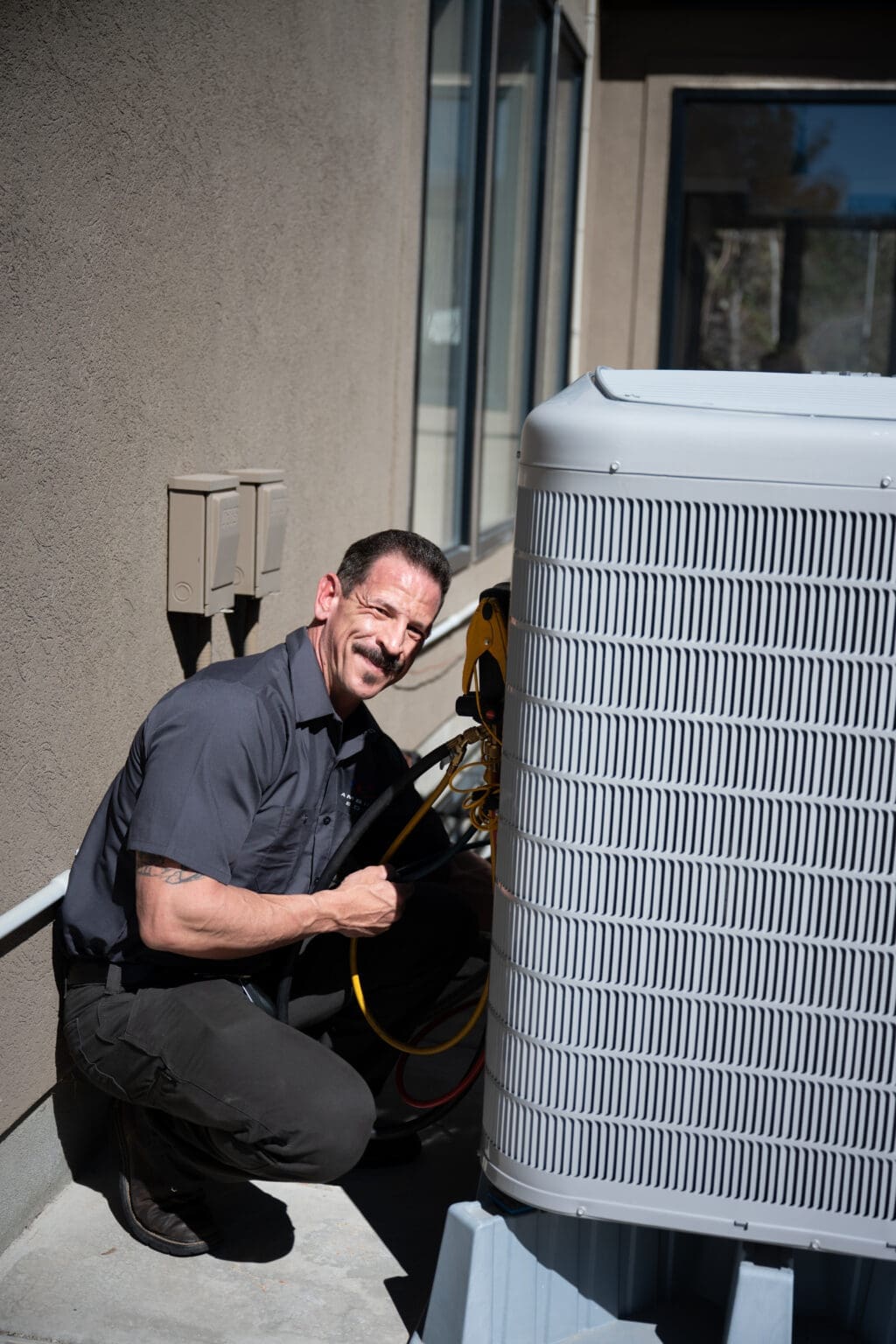
Ambient Edge Heating, Air Conditioning & Refrigeration Inc. Sees the same pattern every June. Units near Route 66 and the Mohave Museum of History and Arts arrive caked with dust. Evaporator coils carry a felt layer from months of filter bypass. Condensate lines clog. Each issue shaves efficiency. When handled together, the savings are visible on your meter.
During a seasonal air conditioning service in Kingman, AZ, a NATE-certified technician inspects the contactor, measures start and run capacitors, checks blower motor amperage, confirms outdoor fan RPM, and verifies superheat and subcooling. If the numbers are off, the system wastes energy and risks a breakdown during a 110°F weekend, when comfort becomes a life-safety issue across Mohave County.
Small parts do big work. Faulty capacitors force motors to draw higher current and run hot. Worn fan motors slip, slowing airflow across the condenser coil, which drives head pressure up. Clogged MERV filters starve the evaporator, causing low suction pressure and sometimes a frozen evaporator coil. Ambient Edge service trucks carry high-quality capacitors and blower motors for same-day restoration. That strategy removes a common cause of high electric bills in one visit.
Airflow, duct losses, and the Kingman attic problem
Ducts in hot attics near Valle Vista and Cerbat can waste a large slice of energy. Even a modest leak sprays conditioned air into a 140°F space, which is like throwing money into the rafters. Metal trunk lines with unsealed joints leak at seams and takeoffs. Flex duct can kink or compress. Both restrict airflow and raise static pressure at the air handler. High static forces the blower to work harder and increases kWh use.
A static pressure reading at the return and supply tells the story. If total external static sits above the manufacturer’s rating, the blower lives in a high-load zone and efficiency slips. In many Kingman homes, a careful duct inspection, proper mastic sealing of boots and plenums, and replacement of undersized runs can cut runtime and amp draw. That change feels like a new system without the purchase price.
Insulation helps the ducts do their job. Duct wrap with intact vapor barriers prevents heat soak and condensation risk. In older homes near Butler and along Hualapai Mountain Road, a basic attic insulation top-off gains real value. Lower attic temperature means cooler supply air and shorter cycles. If the attic hatch lacks a tight gasket, seal it. That tiny detail matters on windy monsoon days.
Charge, coils, and the numbers that control efficiency
Correct refrigerant charge under Mohave County conditions is not a guess. The right charge shows up in measured superheat and subcooling and in stable delta-T across the coil. If you see short cycling, poor cooling, or high bills, look for a refrigerant leak, airflow restriction, or control issue before replacing equipment. A small leak around the service valves or a flare nut on a ductless mini-split can drift charge low. Low charge reduces capacity and drags efficiency down. Bills rise even though comfort drops.
Coils must be clean to move heat. The condenser coil rejects heat to ambient air that may sit around 105–112°F. Dust increases the condensing temperature and pressure, which spikes compressor watt draw. A careful fin-safe cleaning restores heat rejection. Indoors, a clean evaporator coil protects against icing and maintains proper latent and sensible split. That is how a central air conditioner, a heat pump, or a package unit reaches its design SEER2 in real Kingman weather.
Technicians also test contactors and start components during maintenance. Pitted contacts create voltage drop and extra heat. Weak start components risk hard starts, which pound both the compressor and the blower motor. Replacing those parts on schedule is cheaper than a compressor replacement. It also reduces waste current and trims your electric bill.
Equipment type and what works best along Route 66
Kingman has a mix of central air conditioners, heat pumps, ductless mini-splits, rooftop units, and package units on small commercial buildings near the Kingman Airport and Desert Diamond Distillery. Each type has distinct maintenance needs and efficiency profiles in high desert heat.
Central air conditioners remain common in single-family homes. A matched air handler and condenser, sized by accurate Manual J load calculation, lowers runtime and humidity swings. Heat pumps now compete strongly in Mohave County. Modern variable-speed heat pumps from Trane or Lennox hold capacity well at local design temperatures. In homes with sealed ducts, a heat pump can be the lowest-cost option to run across the year.
Ductless mini-splits shine in garage conversions, sunrooms, or casitas off Hualapai Mountain Park roadways where new ductwork is expensive or intrusive. A Mitsubishi Electric or Daikin system with inverter control matches load in small steps. It shines during morning and evening shoulder periods and can run at low watt draw for long stretches. If you need an office zone cooled near the Route 66 Museum, a ductless head may beat extending existing ducts through a hot attic.
Package units and rooftop units serve many small businesses along Andy Devine Avenue. These units sit on hot roofs that amplify heat stress. Coil cleaning, belt checks, drain clearing, and correct economizer setup matter. In many cases, a programmable schedule with locked-out overrides stops after-hours runtime that bleeds cash. For commercial refrigeration repair needs, similar discipline applies. Clean heat exchangers and correct head pressure control reduce both kWh and the chance of product loss.
Window gains, shading, and simple building fixes
Solar gain through west-facing windows is a main driver of peak load in Kingman. Exterior shade is far more effective than interior blinds. Fixed awnings, shade sails, or properly placed deciduous trees make a big difference on Camelback and in Golden Valley where lots are open and exposed. Window films can cut infrared radiation into the space. In older frames, a low-e replacement pane changes the math for afternoon loads.
Air sealing helps the AC do less work. Focus on door sweeps, weatherstrip at entry doors, and gaps at plumbing and electrical penetrations. Check the access panel to the air handler or furnace. Air leaks draw hot attic air into the return stream and increase sensible load. That is an easy fix and one homeowners often overlook.
Filters, IAQ, and why MERV rating choices affect your bill
MERV filters catch dust and protect the evaporator. The higher the MERV, the finer the capture. But resistance rises with higher MERV ratings unless the filter area grows. If a system uses a small one-inch filter rack and you jump to a tight MERV 13 without more surface area, static pressure climbs and the blower works harder. Bills go up even though air looks cleaner.
A proper media cabinet with a larger filter area balances air quality and pressure drop. Ask a technician to measure static pressure before and after any change. That keeps blower amperage within safe range and preserves capacity. Good filtration means cleaner indoor coils, which equals better heat transfer. That again reduces kWh use and extends motor life.
Signs your AC is wasting power and needs attention
Energy waste often announces itself with simple symptoms. AC blowing warm air can point to a failed compressor, a refrigerant leak, or a bad expansion valve. Short cycling may indicate airflow issues or faulty capacitors. Frozen evaporator coils point toward low airflow, low charge, or a blower issue. Water near the indoor unit often comes from a clogged condensate drain that trips float switches and interrupts cooling. Any of these conditions push run time and demand up.
A technician checks the thermostat calibration first, then inspects contactors, start components, and fan assemblies. Blower motor bearings wear and growl before they seize. Condenser fan motors slow down before they stop. Replacing a weak motor early prevents overheating, high head pressures, and high energy draw. Ambient Edge technicians keep common motors and capacitors in stock on service trucks to restore proper amperage in one visit.
Brands common in Kingman and how they respond to service
Ambient Edge services and repairs Carrier, Lennox, Trane, Goodman, Rheem, York, and Bryant systems. High-end systems from Daikin, Mitsubishi Electric, and American Standard also benefit from the same fundamentals. Clean coils, correct charge, tight ducts, and proper controls. Variable-speed equipment gives the best savings when run with steady setpoints and open supply grilles. Closing too many registers to force air to a hot room can spike static and waste power.
Warranty-friendly practices matter. Using genuine OEM parts on newer Lennox or Carrier units helps keep SEER2 performance intact. That protects both efficiency ratings and warranty status. Ambient Edge provides expert warranty repairs across major brands and matches parts to factory specs. That level of care preserves energy savings and avoids premature component failures.
Local service coverage and response time realities
Dispatch coverage spans 86401 and 86409 with rapid emergency service during heat waves. Technicians work homes in Valle Vista and Cerbat, historic properties near the Route 66 Museum, and new builds south of Hualapai Mountain Road. Crews handle calls from Golden Valley to the Kingman Airport area. Neighboring communities such as Bullhead City, Lake Havasu City, Chloride, Hackberry, Peach Springs, and Dolan Springs also receive support based on schedule and demand.
Summer call volume spikes when temperatures climb above 110°F. Ambient Edge runs 24/7 emergency AC repair to protect health and safety. If a system fails, fast response prevents indoor heat buildup. The team is licensed and insured under ROC #245843 and carries EPA 608 credentials. Those credentials matter when handling refrigerants and pressure-related diagnostics in the field.
Tuning commercial cooling and refrigeration around Kingman
Small businesses near the Desert Diamond Distillery and the Kingman Railroad Depot often run rooftop units and commercial refrigeration. These systems live on hot roofs or in dusty back rooms. Neglected condenser coils and blocked airflow force compressors to run at higher head pressure. That increases electric demand every minute. Seasonal coil cleaning, belt replacement, proper fan rotation, and clean filters bring head pressure down and cut bills.
Economizers can save money on mild nights by bringing in cool outdoor air. In Kingman, economizers must be tested for correct damper movement and sensor accuracy. A stuck damper wastes energy and hurts comfort. A sensible control sequence and locked thermostat schedules also prevent after-hours runtime that pushes monthly costs up. The same logic applies to walk-in coolers. Clean heat exchangers and good door gaskets drop compressor runtime and protect inventory.
How to verify improvement on your own meter
Measure results, not just intentions. After a full service that includes coil cleaning, charge verification, and duct sealing, track your daily kWh against outdoor temperature. Most utilities provide a daily usage chart. Compare similar temperature days before and after service. Expect to see a visible gap. If a home had high static pressure corrected, the blower energy alone may drop several hundred watt-hours per day at peak season.
Listen for better compressor sound and steadier airflow. Check that supply vents blow cooler air with less hiss. Cold air with a smooth whoosh is a good sign of lower static and correct charge. If the thermostat shows fewer and longer runs with a lower fan speed on variable equipment, the system is modulating well. That behavior aligns with lower energy use across the afternoon.
Quick homeowner checks before calling for help
Some issues have simple root causes. Before requesting emergency AC service, confirm a few basics. These checks solve minor faults and lower your bill by keeping the system from running impaired. Stop once you reach anything involving wiring, refrigerant, or panel access. Those require a licensed technician.
- Confirm thermostat mode, setpoint, fresh batteries, and a clear schedule.
- Inspect the return filter. Replace if dirty or collapsed.
- Check outdoor unit clearance. Remove debris within two feet of the coil.
- Look at the condensate drain. If water backs up, shut the system off and call.
- Make sure supply and return grilles are open and not blocked by furniture.
If the system still blows warm air, short cycles, or shows ice on lines, schedule service. Those symptoms signal deeper faults such as refrigerant leaks, faulty capacitors, broken fan motors, or control board issues that can spike energy use and cause a breakdown in peak heat.
When replacement beats repair for long-term savings
There is a tipping point between repair and replacement. Units with repeated compressor trips, corroded condenser coils, and restricted evaporators can keep running, but they do so at high cost. If the system uses an older refrigerant blend and shows poor efficiency under pressure testing, a modern SEER2 system may cut summer bills by 20–40 percent depending on duct condition and home envelope.
Heat pumps with variable-speed compressors and ECM blower motors do well in Kingman’s climate. They modulate output to hold steady indoor conditions during late afternoon peaks. Ductless mini-splits from Mitsubishi Electric or Daikin fit bonus rooms and older homes with limited attic access. Where budget permits, consider adding demand-controlled ventilation and a smart thermostat with learning disabled but scheduling enabled for predictable setpoints. Predictability reduces waste.
Ambient Edge can run a load calculation and present a side-by-side cost picture. The picture includes expected kWh use, run hours, and maintenance schedule. The right choice balances upfront cost, comfort goals, and real metered savings on Kingman’s summer bills.
How Ambient Edge approaches peak-season service calls
During a diagnostic call for an AC blowing warm air near the historic Route 66 district, a technician checks airflow first. Filter, blower wheel, evaporator face, and static pressure confirm whether the system can move air. Next, electrical checks cover the contactor, start components, and capacitors. Fan motor amperage and compressor amperage reveal mechanical stress.
Refrigerant checks come after airflow and electrical pass. The tech records suction and discharge pressures, line temperatures, superheat, and subcooling. Those values point to charge issues, expansion valve faults, or condenser performance problems. On ductless systems, the tech inspects the line set insulation near sun-exposed sections by west walls where heat gain is brutal. Any damage there robs capacity and forces longer runs.
If a part fails testing, the truck stock supports a fast fix. Many Kingman service calls wrap up the same day because the team carries contactors, start capacitors, run capacitors, blower motors, and common fan motors. That avoids another hot night and keeps bills from spiking during inefficient operation.
Why local expertise matters for lower bills
Kingman’s housing stock ranges from mid-century ranch to new stucco builds. Duct layouts vary, as do attic heights and insulation levels. A technician who knows the Hualapai Mountain foothills understands the wind-driven dust patterns across certain lots and which side of a home takes the worst sun. That knowledge guides coil cleaning schedules, filter choices, and duct sealing targets. It also shapes thermostat programming that pairs with evening cool-downs from the high desert.
Ambient Edge has supported Mohave County homes and businesses for more than a decade. The team services central air conditioners, heat pumps, ductless mini-splits, package units, and rooftop units. The group also handles commercial refrigeration repair, which demands precise head pressure control and clean heat exchangers. That breadth feeds a disciplined approach to airflow, charge, and controls that lower bills across system types.
Emergency AC repair protects comfort and controls costs
During a heat wave, a failed start capacitor or a seized condenser fan motor pushes indoor temperatures up fast. Emergency AC service is not just comfort. For seniors, infants, and those with health conditions, it is a safety measure. Swift repairs also stop the unit from running in a damaging, inefficient state. That prevents a week of high kWh usage from a struggling compressor or a fan that is near failure.
Ambient Edge runs 24/7 emergency dispatch across Kingman, Golden Valley, and nearby communities. The team communicates arrival windows clearly. Flat-rate pricing keeps charges predictable. The goal is simple. Restore cooling, stabilize runtime, and return the system to an efficient operating point. That is how to keep bills contained through the hottest stretch of July and August.
A simple schedule to keep bills down all season
Discipline works better than heroics. A consistent maintenance and operating plan saves more money than an occasional deep clean. The following rhythm fits most Kingman homes and small businesses that run central AC or heat pumps.
- Replace or wash filters every 30–60 days, more often near dusty routes.
- Keep two feet of clear space around the outdoor condenser year-round.
- Wash the outdoor coil lightly each spring. Schedule a pro cleaning if fins are matted.
- Hold steady setpoints. Use small pre-cool adjustments before peak sun.
- Schedule a pro tune-up each spring to check charge, coils, and static pressure.
If symptoms like short cycling, warm air, ice on lines, or rising bills show up, call for service. Those signs rarely fix themselves and always cost money when ignored.
Neighborhood notes and building quirks across Kingman
Valle Vista homes often place condensers near gravel yards that radiate heat. A simple paver pad with light-colored stone can cut radiant gain into the coil. In Butler and older Kingman Camelback streets, narrow return chases starve air handlers. Converting to a larger return or adding a second return reduces static and cuts blower power. Along Hualapai Mountain Road, steep afternoon sun slams west glass. Exterior shade or a film on those panes reduces compressor time during the 3–6 p.m. Window when rates and grid load are highest.
Commercial spaces by Kingman Airport run rooftop units that need quarterly inspections during summer. Belt wear, slipped pulleys, and dirty condenser coils are common. A short service gap there can push energy spend up for months. For businesses along historic Route 66, dust and foot traffic bring frequent filter changes. A small upgrade to a media filter cabinet pays back in fewer coil cleanings and steadier airflow.
Where “high bill” complaints usually end up
Field experience shows three frequent culprits. First, dirty condenser coils on systems exposed to Route 66 dust and wind. Second, low refrigerant charge from slow leaks at flare connections or service ports. Third, excessive static pressure from restrictive filters or undersized returns. Correcting those three issues unlocks a large share of the savings most homes leave on the table.
Beyond those, weak capacitors are common in high-heat regions. They drift out of spec and drag motors down. The amp draw grows, the unit runs longer, and the bill swells. Replacing a handful of electrical parts before monsoon season is simple, affordable, and pays back fast on the meter.
Ambient Edge Heating, Air Conditioning & Refrigeration Inc.
3270 Kino Ave,
Kingman,
AZ
86409,
United States
Phone: +1 928-615-8224
Website: www.ambientedge.com